The transformation of waste management in Europe
The waste management industry is going through one of the most important transformations of recent decades. The digitalization of cross-border shipments through DIWASS (Digital Waste Shipment System), the new ESG requirements, material traceability obligations and increasingly strict circular economy requirements are fundamentally changing the way companies choose and vet their environmental partners.
DIWASS (Digital Waste Shipment System) is the European Union's digital system used to manage, track and supervise cross-border waste shipments. The platform became mandatory on 21 May 2026 and is one of the most important changes introduced by the new European Regulation on waste shipments.
In this context, companies are no longer looking only for a waste collector or carrier. They are looking for partners able to ensure legal compliance, full traceability, recovery of material value and support for their ESG objectives.
ESG starts with choosing the right partner
For more and more organizations, ESG reporting is no longer a voluntary exercise, but a strategic obligation.
Investors, financial institutions, multinational companies and auditors are looking ever more closely at:
- the route of the waste generated;
- its final destination;
- the rate of recycling and recovery;
- the carbon footprint of operations;
- the level of traceability and documentation.
From this perspective, choosing a partner that can control the entire operational chain becomes a major advantage for any company pursuing real sustainability objectives.
Kupelo Holding – an integrated ecosystem for the circular economy
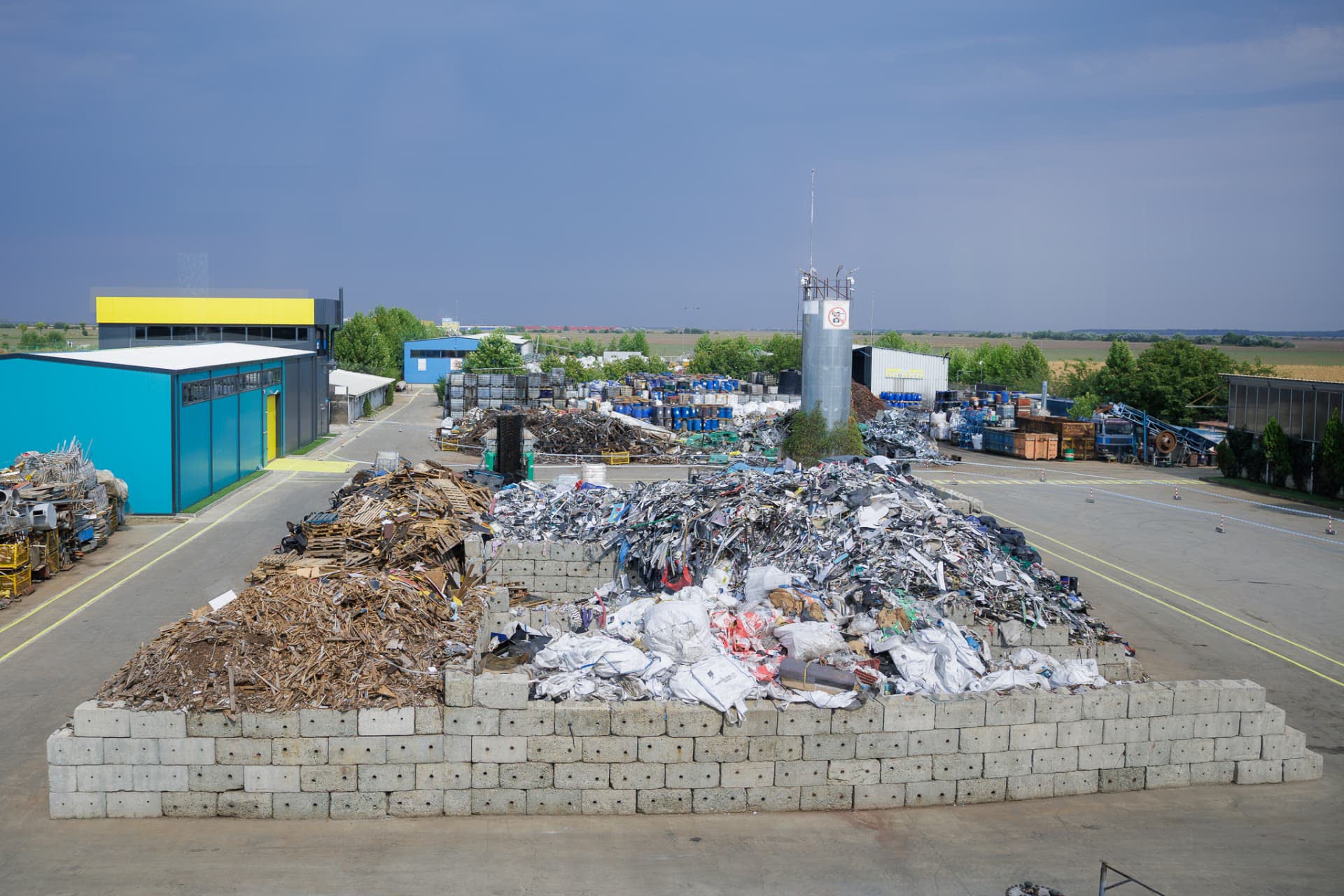
Kupelo Holding brings together specialized companies that cover the entire waste management and recovery cycle, from collection and transport to recycling, recovery and secure destruction.
Through the group's member companies, we can manage both national waste streams and cross-border waste shipments, in compliance with Romanian and European legislation.
The integrated model allows clients to benefit from a single partner for the entire compliance and traceability process.
Final recycling of electrical and electronic waste and batteries
The group includes authorized operators acting as final recyclers for numerous categories of waste electrical and electronic equipment (WEEE), industrial batteries, automotive batteries, lithium-ion batteries, photovoltaic panels and other complex waste streams resulting from the energy transition.
Existing technological capabilities make it possible to recover valuable materials and reintegrate them into the economic cycle, contributing directly to European objectives on the circular economy and on reducing dependence on critical raw materials.
Recovery and treatment of hazardous and non-hazardous waste
Not all waste can be recycled.
For streams that cannot be reintegrated into the recycling process, the group provides treatment, recovery and disposal solutions in compliance with environmental legislation.
These services include hazardous waste treatment, non-hazardous waste treatment, preparation for recovery, recovery operations, controlled disposal operations, site remediation and environmental compliance services.
Through this integrated approach, clients benefit from complete solutions for the full range of waste generated by their activity.
Destruction of non-compliant products and brand protection
The group also includes operators specialized in the secure destruction of non-compliant, expired, damaged or recalled products.
These services are frequently used by:
- manufacturers;
- importers;
- retailers;
- the pharmaceutical industry;
- the food industry;
- manufacturers of electrical and electronic equipment;
- companies in the medical sector.
Documented and traceable product destruction helps protect both intellectual property and brand reputation, while respecting ESG principles of responsible resource management.
Cross-border transport and the challenges of DIWASS
The implementation of DIWASS brings a new stage in the digitalization of international waste shipments.
Many operators are currently looking for information about:
- registration in DIWASS;
- electronic notifications;
- Annex VII documents;
- intra-EU shipments;
- shipments outside the EU;
- authorized destination facilities.
At the same time, numerous private platforms and services offering consultancy for DIWASS registration have appeared.
During this transition period, we recommend that economic operators carefully verify their sources of information and request official clarifications from the competent authorities before submitting documentation or before initiating international waste shipments.
Full traceability – the core element of modern compliance
In the new European legislative context, simply collecting waste is no longer enough.
Companies must be able to demonstrate:
- who generated the waste;
- who transported it;
- where it was treated;
- where it was recycled;
- where it was recovered;
- how much was recovered;
- what the impact is on ESG indicators.
This is why organizations increasingly choose partners able to manage the entire compliance and traceability chain.
The future belongs to the circular economy
The transition to a circular economy is no longer just an environmental objective, but an essential condition for the competitiveness of European companies.
By integrating recycling, recovery, treatment, secure destruction and cross-border transport services, Kupelo Holding contributes to building a sustainable model in which resources are recovered, risks are controlled and legal compliance is ensured at every stage of the process.
For companies pursuing real ESG performance, full traceability and partners with operational experience, choosing an integrated ecosystem is the safest path to long-term compliance and sustainability.